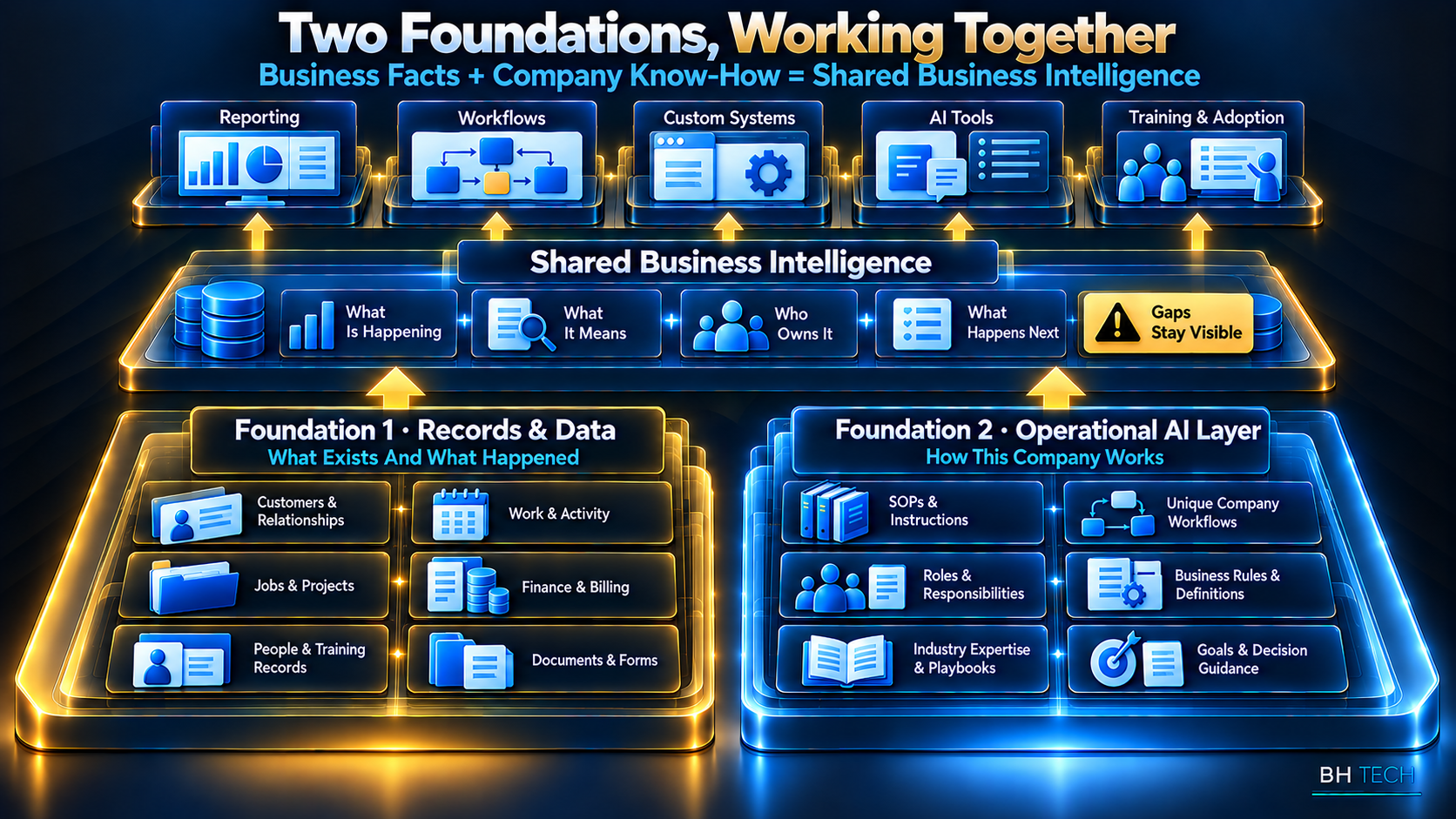
Foundation 1 organizes the business facts. Foundation 2 organizes how the company works. Together, they give people, systems and AI tools the context to understand the work and take the right next step.
The Operational AI Layer is the company’s knowledge organized for people and AI: procedures, handoffs, responsibilities, definitions, expert practice and priorities.
These are examples of how the categories work together. A record can draw on several kinds of guidance; the connections extend across the whole business.
All Twelve Categories · Open Any Category For Its Infographic And Example
What evidence is required, and where is the correct form or version?
Existing Illustrative Example · JOB-2291
One Job Shows The Combined Value
The job tool says Completed. The punch list is closed, but the customer sign-off form is not attached. The document catalog shows that form exists on paper.
Records & Data show the job, customer, documents and missing evidence link.
Rules, Workflow And SOP explain why the handoff is held and which checks still need review.
Roles And Goals identify the field lead’s and office manager’s next actions, while keeping sign-off ahead of speed.
The field lead attaches the evidence. The office manager then reviews readiness.
Reporting shows the hold. The workflow identifies the next owner. A custom workspace brings it together. AI can explain the gap or draft a follow-up. Training helps people use the same process. Attaching one form does not complete every readiness check.
The Overall Story
BH Tech connects a company’s records with its operating knowledge, then builds reporting, workflows, business systems and AI tools around that shared context. Training helps people use them.
The twelve categories explain what sits underneath those results. Each client’s sources, practices and priorities determine which connections are needed.